A week later, Norway mourns 77 victims of massacre
By IAN MacDOUGALL and BJOERN H. AMLAND , 07.30.11, 12:01 AM EDT
Associated Press Television News producer David Mac Dougall in Oslo and AP writer Louise Nordstrom in Stockholm contributed to this report.
OSLO, Norway -- Norway began burying the dead on Friday, a week after an anti-Muslim extremist killed 77 people in a bombing and shooting rampage. Mourners of all ages vowed they would not let the massacre threaten their nation's openness and democracy.
An 18-year-old Muslim girl was the first victim to be laid to rest since the gunman opened fire at a political youth camp and bombed the government headquarters in Oslo.
After a funeral service in the Nesodden church outside the capital, Bano Rashid, a Kurdish immigrant from Iraq, was buried in a Muslim rite. Sobbing youth accompanied her coffin, which was draped in a Kurdish flag.
The attack will "not destroy Norway's commitment to democracy, tolerance and fighting racism," Labor Party youth-wing leader Eskil Pedersen said at a memorial service in Oslo.
Pedersen, who was on the island retreat of Utoya when the gunman's attack began, said: "Long before he stands before a court we can say: he has lost."
Pedersen said the youth organization would return to Utoya next year for its annual summer gathering, a tradition that stretches back decades.
Read All Comments
Police raised the death toll to 77, from 76, and said all those killed in the July 22 terror attacks in Oslo and on Utoya have now been identified and those reported missing have been accounted for.
Norway's Police Security Service said the threat from right-wing extremists remains unchanged after Anders Behring Breivik's attack. It said the 32-year-old Norwegian's actions lack parallels in Europe or elsewhere, his views differ from the ideology of most racist and neo-Nazi groups, and very few people in Norway are capable of replicating what he did.
Since the massacre, questions have persisted about whether authorities had underestimated extremist dangers in Norway.
At Friday's memorial service in Oslo at the assembly hall of the "People's House," a community center for Norway's labor movement, Prime Minister Jens Stoltenberg said: "Today it is one week since Norway was hit by evil."
The bullets struck dozens of members of the youth faction of his Labor Party, but they were aimed at the entire nation, Stoltenberg said, on a stage adorned with red roses, the symbol of his party.
"I think July 22 will be a very strong symbol of the Norwegian people's wish to be united in our fight against violence, and will be a symbol of how the nation can answer with love," he told reporters after the ceremony.
Members of the audience raised bouquets of flowers as each speaker took the stage, and some of them fought back tears as they spoke.
Later, Stoltenberg spoke at a Muslim memorial service in Gronland, an immigrant neighborhood in Oslo. The prime minister called for unity across ethnic and religious lines, a message he has repeated many times since the attacks.
Breivik, a vehement anti-Muslim, was questioned by police Friday for the second time since surrendering to an anti-terror squad on Utoya, where his victims lay strewn across the shore and in the water. Many were teens who were gunned down as they tried to flee the onslaught.
In a 1,500-page manifesto released just before the attacks, Breivik ranted about Europe being overrun by Muslim immigrants and blamed left-wing political forces for making the continent multicultural.
Police attorney Paal-Fredrik Hjort Kraby said the Breivik remained calm and cooperative during the questioning session, in which investigators reviewed with him his statements from an earlier session on Saturday. Investigators believe Breivik acted alone, after years of meticulous planning, and haven't found anything to support his claims that he's part of an anti-Muslim militant network plotting a series of coups d'etat across Europe.
Police also said they have identified all of the victims, 68 of whom were killed on the island and eight who died after a car bomb exploded in downtown Oslo. Breivik has confessed to both attacks but denies criminal guilt because he believes he's in a state of war, his lawyer and police have said.
Police have charged Breivik with terrorism, which carries a maximum sentence of 21 years in prison. However, it's possible the charge will change during the investigation to crimes against humanity, which carries a 30-year prison term, Norway's top prosecutor Tor-Aksel Busch told The Associated Press.
"Such charges will be considered when the entire police investigation has been finalized," he said. "It is an extensive investigation. We will charge Breivik for each individual killing."
Prosecutors can also seek a special kind of sentence that would enable the court to keep Breivik in prison indefinitely. A formal indictment isn't expected until next year, Busch said.
A weapons supplier in Norway confirmed his company sold device that enables quick loading of magazines for a rifle and four 30-round clips for a Glock 17 pistol to Breivik, who ordered the equipment online in November and December last year.
Flemming Mark Pedersen, owner of Capsicum Solutions AS, said the purchase was legal and there was no indication of what Breivik was up to.
"But just like the police officer who approved his (gun) license, the company that provided him with fertilizer and the firm that sold him diesel, we feel guilty to a certain level and wonder whether this could have been prevented in some way," Pedersen told The Associated Press.
Since the attacks, immigrants and ethnic Norwegians have come together in grief for the victims, and with disdain for the attacker and his motives. A sometimes divisive debate about immigration has been put aside.
So many roses have been placed at makeshift memorials around Oslo and other Norwegian cities that domestic suppliers cannot keep up with demand. The government has suspended a tax on foreign roses to allow for more imports between July 26 and Aug. 2, Norwegian news agency NTB reported.
Copyright 2011 The Associated Press. All rights reserved. This material may not be published, broadcast, rewritten or redistributed.
Saturday, 30 July 2011

Norway massacre survivors tell their stories
Norway massacre survivors tell their stories
By DAVID MacDOUGALL, Associated Press – Jul 30, 2011
OSLO, Norway (AP) — Three survivors of the bombing and shooting spree that left 77 people dead in Norway told their stories to The Associated Press this week.
The Barzingi siblings are Iraqi Kurds who came to Norway 12 years ago. They were attending a political youth retreat on a resort island when an anti-immigrant extremist opened fire, soon after setting off a bomb in the nearby capital, Oslo.

___
Hana Barzingi, a 17-year-old girl and full-time student.
"When I heard the shooting, I thought it was a joke, so I just sat there when everyone ran to the windows. And then everybody was just laying down with their hands over their heads. Then me and my friend stood up and I went to the window. There I saw a man. Blond hair, blue eyes, with iPod headset, earplugs, and he had a big sniper (gun) I think. And then I said 'What the hell are you doing?' because I didn't know what was going to happen or where he (the shooter) was. So he just turned around and said to me 'have you heard where the shooting is coming from?' And I said 'to the left' and when I said it I just looked to the left and I saw two people already laying there dead. And so he said to me 'I'm a cop and I will get you guys a place where is safe and I just have to gather everyone so it could be easier for me to protect you.' When he said that I think someone heard it because someone ran out. And he just took up the gun and shot the person.
"Actually, he talked like he was all calmed down. And then when he shot the person he just turned around softly and just looked at me. Then I was in shock and I just grabbed my friend's arm and pulled her down. And then I heard the shooting was coming inside. So he started to come into the house. And I just ran. It was like a group of sheep, like running from a dog or something. People were falling down. Nobody cared, they just ran for their life ...
"I found out that two of my friends died, but I feel so empty inside like I want to cry. When I meet friends they expect me to cry. But I don't feel the tears are there. I really think this is a nightmare still ... So I don't know why I'm so empty but I'm waiting for the reaction to come.
"Actually, I smile, like now and then. When I feel like I want to smile. But when people smile at me I don't really want to smile because if it feels like they show me sympathy, I don't want it. Because I know what I've been through. But they're just faking a smile to make me feel glad."
___
Hajin Barzingi, a 19-year-old woman and full-time student:
"I remember I was at the phone with my sister to give her a warning about Oslo and then when she got off the phone the shooting started. And then I thought it was just a joke, someone just playing with some balloons or something. But then several people ran into the little room where I was, crying and shouting out 'there's someone out there shooting at people'. And then the shooting came closer and closer, and then I understood this was serious. So I went to the hall looking for these two (points at her brother & sister). But I couldn't find them, so I thought they were hiding somewhere safe, so I should do that too. So I ran into the toilet nearby. And I ran into a little toilet. There were two guys there. And I said 'I'm going to hide with you guys,' and they said okay, And then a lady from Uganda, she was an international guest, ran in too, and lay down on the floor because she was pregnant. So we closed the door and sat there and tried to be quiet, don't do any moves or anything, and tell each other it's going to be fine, we're going to get help, the police are going to come. And then the text messages started, from everyone I know and everyone I don't know telling me 'Are you at Utoya,? How are you? and stuff.' But there was two friends of mine who gave me information about the world outside, about what's happening, so I got to know that the police are coming, helicopters are on the way, so that I could calm the others down.
Many people say that Norwegian people are cold hearted, and cold humans and such stuff. I've heard it a lot and I just want to tell everybody that Norwegian people are warm-hearted, you just need to get to know them and get past their wall. And as you see how Norway has taken this situation, everyone cares. And each of those who didn't make it at the island are also a child of every mother and father here in this country.
I'm not thinking about the dead as if they are gone forever. I'm thinking that they are happy, and they are together, everyone who died. They are with each other, and just have to trust. And so do we who are still alive. And there's a reason why we are alive. Even though all of a sudden I start crying.
___
Dana Barzingi, a 21-year-old man who works as an electrician.
"I didn't know what to do. I just ran around the island and I was looking for them (nods at sisters). And I picked up wounded people on the way. I brought them to a safe place and I just went and looked for them (nods again at sisters), until the police took me and thought I was a terrorist. I wasn't the only one. Another friend of mine, the police thought he was a terrorist."
On friends who died.
"They were great people. They were the best people you could get to know. They didn't care if you were white, black, yellow or whatever. When they looked at you, they looked at you like a human. So, we miss them, but... There are no words. Words can't describe how they were. They were fantastic. They were the best people I knew. I'm starting to smile a bit now. Now and then. In a week? In a year? I don't know. I don't know if I ever will go back to the same person I was once. And I don't think I will be. I feel much stronger right now than I was. What doesn't kill you makes you only stronger"
Copyright © 2011 The Associated Press. All rights reserved.
By DAVID MacDOUGALL, Associated Press – Jul 30, 2011
OSLO, Norway (AP) — Three survivors of the bombing and shooting spree that left 77 people dead in Norway told their stories to The Associated Press this week.
The Barzingi siblings are Iraqi Kurds who came to Norway 12 years ago. They were attending a political youth retreat on a resort island when an anti-immigrant extremist opened fire, soon after setting off a bomb in the nearby capital, Oslo.

___
Hana Barzingi, a 17-year-old girl and full-time student.
"When I heard the shooting, I thought it was a joke, so I just sat there when everyone ran to the windows. And then everybody was just laying down with their hands over their heads. Then me and my friend stood up and I went to the window. There I saw a man. Blond hair, blue eyes, with iPod headset, earplugs, and he had a big sniper (gun) I think. And then I said 'What the hell are you doing?' because I didn't know what was going to happen or where he (the shooter) was. So he just turned around and said to me 'have you heard where the shooting is coming from?' And I said 'to the left' and when I said it I just looked to the left and I saw two people already laying there dead. And so he said to me 'I'm a cop and I will get you guys a place where is safe and I just have to gather everyone so it could be easier for me to protect you.' When he said that I think someone heard it because someone ran out. And he just took up the gun and shot the person.
"Actually, he talked like he was all calmed down. And then when he shot the person he just turned around softly and just looked at me. Then I was in shock and I just grabbed my friend's arm and pulled her down. And then I heard the shooting was coming inside. So he started to come into the house. And I just ran. It was like a group of sheep, like running from a dog or something. People were falling down. Nobody cared, they just ran for their life ...
"I found out that two of my friends died, but I feel so empty inside like I want to cry. When I meet friends they expect me to cry. But I don't feel the tears are there. I really think this is a nightmare still ... So I don't know why I'm so empty but I'm waiting for the reaction to come.
"Actually, I smile, like now and then. When I feel like I want to smile. But when people smile at me I don't really want to smile because if it feels like they show me sympathy, I don't want it. Because I know what I've been through. But they're just faking a smile to make me feel glad."
___
Hajin Barzingi, a 19-year-old woman and full-time student:
"I remember I was at the phone with my sister to give her a warning about Oslo and then when she got off the phone the shooting started. And then I thought it was just a joke, someone just playing with some balloons or something. But then several people ran into the little room where I was, crying and shouting out 'there's someone out there shooting at people'. And then the shooting came closer and closer, and then I understood this was serious. So I went to the hall looking for these two (points at her brother & sister). But I couldn't find them, so I thought they were hiding somewhere safe, so I should do that too. So I ran into the toilet nearby. And I ran into a little toilet. There were two guys there. And I said 'I'm going to hide with you guys,' and they said okay, And then a lady from Uganda, she was an international guest, ran in too, and lay down on the floor because she was pregnant. So we closed the door and sat there and tried to be quiet, don't do any moves or anything, and tell each other it's going to be fine, we're going to get help, the police are going to come. And then the text messages started, from everyone I know and everyone I don't know telling me 'Are you at Utoya,? How are you? and stuff.' But there was two friends of mine who gave me information about the world outside, about what's happening, so I got to know that the police are coming, helicopters are on the way, so that I could calm the others down.
Many people say that Norwegian people are cold hearted, and cold humans and such stuff. I've heard it a lot and I just want to tell everybody that Norwegian people are warm-hearted, you just need to get to know them and get past their wall. And as you see how Norway has taken this situation, everyone cares. And each of those who didn't make it at the island are also a child of every mother and father here in this country.
I'm not thinking about the dead as if they are gone forever. I'm thinking that they are happy, and they are together, everyone who died. They are with each other, and just have to trust. And so do we who are still alive. And there's a reason why we are alive. Even though all of a sudden I start crying.
___
Dana Barzingi, a 21-year-old man who works as an electrician.
"I didn't know what to do. I just ran around the island and I was looking for them (nods at sisters). And I picked up wounded people on the way. I brought them to a safe place and I just went and looked for them (nods again at sisters), until the police took me and thought I was a terrorist. I wasn't the only one. Another friend of mine, the police thought he was a terrorist."
On friends who died.
"They were great people. They were the best people you could get to know. They didn't care if you were white, black, yellow or whatever. When they looked at you, they looked at you like a human. So, we miss them, but... There are no words. Words can't describe how they were. They were fantastic. They were the best people I knew. I'm starting to smile a bit now. Now and then. In a week? In a year? I don't know. I don't know if I ever will go back to the same person I was once. And I don't think I will be. I feel much stronger right now than I was. What doesn't kill you makes you only stronger"
Copyright © 2011 The Associated Press. All rights reserved.
Norway massacre - one week of mourning
A week later, Norway mourns 77 victims of massacre
By IAN MacDOUGALL and BJOERN H. AMLAND , 07.30.11, 12:01 AM EDT
Associated Press Television News producer David Mac Dougall in Oslo and AP writer Louise Nordstrom in Stockholm contributed to this report.
OSLO, Norway -- Norway began burying the dead on Friday, a week after an anti-Muslim extremist killed 77 people in a bombing and shooting rampage. Mourners of all ages vowed they would not let the massacre threaten their nation's openness and democracy.
An 18-year-old Muslim girl was the first victim to be laid to rest since the gunman opened fire at a political youth camp and bombed the government headquarters in Oslo.
After a funeral service in the Nesodden church outside the capital, Bano Rashid, a Kurdish immigrant from Iraq, was buried in a Muslim rite. Sobbing youth accompanied her coffin, which was draped in a Kurdish flag.
The attack will "not destroy Norway's commitment to democracy, tolerance and fighting racism," Labor Party youth-wing leader Eskil Pedersen said at a memorial service in Oslo.
Pedersen, who was on the island retreat of Utoya when the gunman's attack began, said: "Long before he stands before a court we can say: he has lost."
Pedersen said the youth organization would return to Utoya next year for its annual summer gathering, a tradition that stretches back decades.
Read All Comments
Police raised the death toll to 77, from 76, and said all those killed in the July 22 terror attacks in Oslo and on Utoya have now been identified and those reported missing have been accounted for.
Norway's Police Security Service said the threat from right-wing extremists remains unchanged after Anders Behring Breivik's attack. It said the 32-year-old Norwegian's actions lack parallels in Europe or elsewhere, his views differ from the ideology of most racist and neo-Nazi groups, and very few people in Norway are capable of replicating what he did.
Since the massacre, questions have persisted about whether authorities had underestimated extremist dangers in Norway.
At Friday's memorial service in Oslo at the assembly hall of the "People's House," a community center for Norway's labor movement, Prime Minister Jens Stoltenberg said: "Today it is one week since Norway was hit by evil."
The bullets struck dozens of members of the youth faction of his Labor Party, but they were aimed at the entire nation, Stoltenberg said, on a stage adorned with red roses, the symbol of his party.
"I think July 22 will be a very strong symbol of the Norwegian people's wish to be united in our fight against violence, and will be a symbol of how the nation can answer with love," he told reporters after the ceremony.
Members of the audience raised bouquets of flowers as each speaker took the stage, and some of them fought back tears as they spoke.
Later, Stoltenberg spoke at a Muslim memorial service in Gronland, an immigrant neighborhood in Oslo. The prime minister called for unity across ethnic and religious lines, a message he has repeated many times since the attacks.
Breivik, a vehement anti-Muslim, was questioned by police Friday for the second time since surrendering to an anti-terror squad on Utoya, where his victims lay strewn across the shore and in the water. Many were teens who were gunned down as they tried to flee the onslaught.
In a 1,500-page manifesto released just before the attacks, Breivik ranted about Europe being overrun by Muslim immigrants and blamed left-wing political forces for making the continent multicultural.
Police attorney Paal-Fredrik Hjort Kraby said the Breivik remained calm and cooperative during the questioning session, in which investigators reviewed with him his statements from an earlier session on Saturday. Investigators believe Breivik acted alone, after years of meticulous planning, and haven't found anything to support his claims that he's part of an anti-Muslim militant network plotting a series of coups d'etat across Europe.
Police also said they have identified all of the victims, 68 of whom were killed on the island and eight who died after a car bomb exploded in downtown Oslo. Breivik has confessed to both attacks but denies criminal guilt because he believes he's in a state of war, his lawyer and police have said.
Police have charged Breivik with terrorism, which carries a maximum sentence of 21 years in prison. However, it's possible the charge will change during the investigation to crimes against humanity, which carries a 30-year prison term, Norway's top prosecutor Tor-Aksel Busch told The Associated Press.
"Such charges will be considered when the entire police investigation has been finalized," he said. "It is an extensive investigation. We will charge Breivik for each individual killing."
Prosecutors can also seek a special kind of sentence that would enable the court to keep Breivik in prison indefinitely. A formal indictment isn't expected until next year, Busch said.
A weapons supplier in Norway confirmed his company sold device that enables quick loading of magazines for a rifle and four 30-round clips for a Glock 17 pistol to Breivik, who ordered the equipment online in November and December last year.
Flemming Mark Pedersen, owner of Capsicum Solutions AS, said the purchase was legal and there was no indication of what Breivik was up to.
"But just like the police officer who approved his (gun) license, the company that provided him with fertilizer and the firm that sold him diesel, we feel guilty to a certain level and wonder whether this could have been prevented in some way," Pedersen told The Associated Press.
Since the attacks, immigrants and ethnic Norwegians have come together in grief for the victims, and with disdain for the attacker and his motives. A sometimes divisive debate about immigration has been put aside.
So many roses have been placed at makeshift memorials around Oslo and other Norwegian cities that domestic suppliers cannot keep up with demand. The government has suspended a tax on foreign roses to allow for more imports between July 26 and Aug. 2, Norwegian news agency NTB reported.
Copyright 2011 The Associated Press. All rights reserved. This material may not be published, broadcast, rewritten or redistributed.
By IAN MacDOUGALL and BJOERN H. AMLAND , 07.30.11, 12:01 AM EDT
Associated Press Television News producer David Mac Dougall in Oslo and AP writer Louise Nordstrom in Stockholm contributed to this report.
OSLO, Norway -- Norway began burying the dead on Friday, a week after an anti-Muslim extremist killed 77 people in a bombing and shooting rampage. Mourners of all ages vowed they would not let the massacre threaten their nation's openness and democracy.
An 18-year-old Muslim girl was the first victim to be laid to rest since the gunman opened fire at a political youth camp and bombed the government headquarters in Oslo.
After a funeral service in the Nesodden church outside the capital, Bano Rashid, a Kurdish immigrant from Iraq, was buried in a Muslim rite. Sobbing youth accompanied her coffin, which was draped in a Kurdish flag.
The attack will "not destroy Norway's commitment to democracy, tolerance and fighting racism," Labor Party youth-wing leader Eskil Pedersen said at a memorial service in Oslo.
Pedersen, who was on the island retreat of Utoya when the gunman's attack began, said: "Long before he stands before a court we can say: he has lost."
Pedersen said the youth organization would return to Utoya next year for its annual summer gathering, a tradition that stretches back decades.
Read All Comments
Police raised the death toll to 77, from 76, and said all those killed in the July 22 terror attacks in Oslo and on Utoya have now been identified and those reported missing have been accounted for.
Norway's Police Security Service said the threat from right-wing extremists remains unchanged after Anders Behring Breivik's attack. It said the 32-year-old Norwegian's actions lack parallels in Europe or elsewhere, his views differ from the ideology of most racist and neo-Nazi groups, and very few people in Norway are capable of replicating what he did.
Since the massacre, questions have persisted about whether authorities had underestimated extremist dangers in Norway.
At Friday's memorial service in Oslo at the assembly hall of the "People's House," a community center for Norway's labor movement, Prime Minister Jens Stoltenberg said: "Today it is one week since Norway was hit by evil."
The bullets struck dozens of members of the youth faction of his Labor Party, but they were aimed at the entire nation, Stoltenberg said, on a stage adorned with red roses, the symbol of his party.
"I think July 22 will be a very strong symbol of the Norwegian people's wish to be united in our fight against violence, and will be a symbol of how the nation can answer with love," he told reporters after the ceremony.
Members of the audience raised bouquets of flowers as each speaker took the stage, and some of them fought back tears as they spoke.
Later, Stoltenberg spoke at a Muslim memorial service in Gronland, an immigrant neighborhood in Oslo. The prime minister called for unity across ethnic and religious lines, a message he has repeated many times since the attacks.
Breivik, a vehement anti-Muslim, was questioned by police Friday for the second time since surrendering to an anti-terror squad on Utoya, where his victims lay strewn across the shore and in the water. Many were teens who were gunned down as they tried to flee the onslaught.
In a 1,500-page manifesto released just before the attacks, Breivik ranted about Europe being overrun by Muslim immigrants and blamed left-wing political forces for making the continent multicultural.
Police attorney Paal-Fredrik Hjort Kraby said the Breivik remained calm and cooperative during the questioning session, in which investigators reviewed with him his statements from an earlier session on Saturday. Investigators believe Breivik acted alone, after years of meticulous planning, and haven't found anything to support his claims that he's part of an anti-Muslim militant network plotting a series of coups d'etat across Europe.
Police also said they have identified all of the victims, 68 of whom were killed on the island and eight who died after a car bomb exploded in downtown Oslo. Breivik has confessed to both attacks but denies criminal guilt because he believes he's in a state of war, his lawyer and police have said.
Police have charged Breivik with terrorism, which carries a maximum sentence of 21 years in prison. However, it's possible the charge will change during the investigation to crimes against humanity, which carries a 30-year prison term, Norway's top prosecutor Tor-Aksel Busch told The Associated Press.
"Such charges will be considered when the entire police investigation has been finalized," he said. "It is an extensive investigation. We will charge Breivik for each individual killing."
Prosecutors can also seek a special kind of sentence that would enable the court to keep Breivik in prison indefinitely. A formal indictment isn't expected until next year, Busch said.
A weapons supplier in Norway confirmed his company sold device that enables quick loading of magazines for a rifle and four 30-round clips for a Glock 17 pistol to Breivik, who ordered the equipment online in November and December last year.
Flemming Mark Pedersen, owner of Capsicum Solutions AS, said the purchase was legal and there was no indication of what Breivik was up to.
"But just like the police officer who approved his (gun) license, the company that provided him with fertilizer and the firm that sold him diesel, we feel guilty to a certain level and wonder whether this could have been prevented in some way," Pedersen told The Associated Press.
Since the attacks, immigrants and ethnic Norwegians have come together in grief for the victims, and with disdain for the attacker and his motives. A sometimes divisive debate about immigration has been put aside.
So many roses have been placed at makeshift memorials around Oslo and other Norwegian cities that domestic suppliers cannot keep up with demand. The government has suspended a tax on foreign roses to allow for more imports between July 26 and Aug. 2, Norwegian news agency NTB reported.
Copyright 2011 The Associated Press. All rights reserved. This material may not be published, broadcast, rewritten or redistributed.
Friday, 29 July 2011
AUDIO: Norway massacre survivors
A survivor from Utøya tells the story of her escape to safety and gives her thoughts on Anders Breivik.
CLICK HERE TO LISTEN TO MY AUDIOBOO INTERVIEW

CLICK HERE TO LISTEN TO MY AUDIOBOO INTERVIEW

Monday, 25 July 2011
Norway / Hungary - Photo

CLICK HERE TO READ THE ORIGINAL WEBSITE (IN HUNGARIAN!)
Thursday, 21 July 2011
APNewsBreak: US Mulls Sanctions Against Iceland
APNewsBreak: US Mulls Sanctions Against Iceland
By DAVID Mac DOUGALL Associated Press
HELSINKI July 20, 2011 (AP)
The United States is set to announce possible trade and diplomatic sanctions against Iceland for ramping up its whale hunts despite an international moratorium on commercial whaling.
The Obama administration on Wednesday will cite Iceland under a domestic law that allows the president to act against foreign nationals or countries who flout international animal conservation rules, U.S. officials told The Associated Press.
After the announcement the president has 60 days to decide on sanctions. Sometimes, the threat of sanctions is enough to make targeted countries change their practices.
The move comes less than a week after the annual meeting of the International Whaling Commission stalled in discord between pro-whaling nations such as Iceland and Japan and their opponents.
Iceland, Norway and Japan continue to hunt whales despite a 1986 moratorium on commercial whaling. The U.S. is particularly concerned about Iceland's escalated hunt for endangered fin whales and its recent resumption of exports of whale meat to other pro-whaling nations.
Iceland has tried to cultivate a trade in fin whale meat that "just wasn't there" before, an official with the National Oceanic and Atmospheric Administration told AP.
"If there was to be a trade in whale meat again the moratorium against whaling would have a hard time surviving. Other countries might want to get into the action and whale stocks just haven't recovered," the official said, speaking on condition of anonymity ahead of the formal announcement.
Wildlife conservation groups have lobbied the Obama administration to take action against the Nordic island nation through the Pelly Amendment to the Fishermen's Protective Act. U.S. officials said Commerce Secretary Gary Locke would cite Iceland under the amendment on Wednesday and recommend a range of possible sanctions against Iceland to President Barack Obama.
They include targeting legitimate fish imports by Icelandic companies that are also involved in whaling. The president will also be urged to consider a number of diplomatic sanctions, ranging from U.S. officials simply lobbying their Icelandic counterparts more forcefully on whaling to Cabinet members boycotting official visits to Iceland. State Department diplomats could also pull out of programs — for example in the Arctic — where the two countries routinely cooperate.
The Whale and Dolphin Conservation Society (WDCS) described the U.S. decision as "a bold move ... and represents a massive step forward in the fight against Iceland's illegal whaling."
WDCS says Iceland has killed 280 fin whales since it resumed commercial whaling in 2006, exporting millions of dollars of meat, blubber and oil to other pro-whaling nations.
Iceland has increased its self-allocated fin whale quota to 150 animals per year, three times what the IWC's scientific committee considers sustainable for the species' survival.
The main target of anti-whaling activists is Hvalur hf, the only Icelandic company that hunts fin whales. Hvalur's CEO Kristjan Loftsson, who is part of his country's IWC delegation, is often criticized by anti-whaling groups for his fin whale catch and killing methods they say are unnecessarily cruel.
The NOAA official said that Loftsson has been stockpiling culled fin whale meat in cold storage, and "acts as if there will be a market for this product, but there really hasn't been so far." The official added that Loftsson "takes profits from his other fisheries business to support his illegal whaling business."
In May, Loftsson's company announced a temporary halt to its 2011 fin whale hunt, in part a response to a previous U.S.-led diplomatic protest, but also because of market uncertainties in Japan after the earthquake and tsunami.
Another reason the U.S. is applying domestic law to a foreign country is because of the relatively ineffectual IWC, the international forum intended to manage whale numbers and bring together pro-and-anti whaling groups.
In recent years the IWC has been beset with allegations of corruption, and this year's meeting in the Channel Islands saw Iceland, Japan and Norway grind proceedings to a halt over issues such as whale killing methods, animal welfare, the establishment of conservation zones and whether to grant more rights to environmental groups to be represented at IWC conferences.
Monica Medina, the U.S. commissioner at the IWC said the lack of progress in those talks means "it's up to countries who care about conservation and whales to use diplomatic and domestic legislation like this one."
Medina's view is shared by New Zealand, a leading anti-whaling nation.
"It is very helpful that the U.S. is in a position to take this sort of action" said Gerard Van Bohemen, who heads New Zealand's IWC delegation. "As long as we are unable to advance the discussions in the IWC, people will look to find other ways of bringing about an end to commercial whaling."
Previous U.S. administrations have used the Pelly Amendment to warn other countries for their whaling practices. In 1986, 1990 and 1993 Norway was cited for hunting minke whales; and in 1992 Norway was again certified for killing whales for research. However the U.S. didn't follow through with trade and diplomatic sanctions.
By DAVID Mac DOUGALL Associated Press
HELSINKI July 20, 2011 (AP)
The United States is set to announce possible trade and diplomatic sanctions against Iceland for ramping up its whale hunts despite an international moratorium on commercial whaling.
The Obama administration on Wednesday will cite Iceland under a domestic law that allows the president to act against foreign nationals or countries who flout international animal conservation rules, U.S. officials told The Associated Press.
After the announcement the president has 60 days to decide on sanctions. Sometimes, the threat of sanctions is enough to make targeted countries change their practices.
The move comes less than a week after the annual meeting of the International Whaling Commission stalled in discord between pro-whaling nations such as Iceland and Japan and their opponents.
Iceland, Norway and Japan continue to hunt whales despite a 1986 moratorium on commercial whaling. The U.S. is particularly concerned about Iceland's escalated hunt for endangered fin whales and its recent resumption of exports of whale meat to other pro-whaling nations.
Iceland has tried to cultivate a trade in fin whale meat that "just wasn't there" before, an official with the National Oceanic and Atmospheric Administration told AP.
"If there was to be a trade in whale meat again the moratorium against whaling would have a hard time surviving. Other countries might want to get into the action and whale stocks just haven't recovered," the official said, speaking on condition of anonymity ahead of the formal announcement.
Wildlife conservation groups have lobbied the Obama administration to take action against the Nordic island nation through the Pelly Amendment to the Fishermen's Protective Act. U.S. officials said Commerce Secretary Gary Locke would cite Iceland under the amendment on Wednesday and recommend a range of possible sanctions against Iceland to President Barack Obama.
They include targeting legitimate fish imports by Icelandic companies that are also involved in whaling. The president will also be urged to consider a number of diplomatic sanctions, ranging from U.S. officials simply lobbying their Icelandic counterparts more forcefully on whaling to Cabinet members boycotting official visits to Iceland. State Department diplomats could also pull out of programs — for example in the Arctic — where the two countries routinely cooperate.
The Whale and Dolphin Conservation Society (WDCS) described the U.S. decision as "a bold move ... and represents a massive step forward in the fight against Iceland's illegal whaling."
WDCS says Iceland has killed 280 fin whales since it resumed commercial whaling in 2006, exporting millions of dollars of meat, blubber and oil to other pro-whaling nations.
Iceland has increased its self-allocated fin whale quota to 150 animals per year, three times what the IWC's scientific committee considers sustainable for the species' survival.
The main target of anti-whaling activists is Hvalur hf, the only Icelandic company that hunts fin whales. Hvalur's CEO Kristjan Loftsson, who is part of his country's IWC delegation, is often criticized by anti-whaling groups for his fin whale catch and killing methods they say are unnecessarily cruel.
The NOAA official said that Loftsson has been stockpiling culled fin whale meat in cold storage, and "acts as if there will be a market for this product, but there really hasn't been so far." The official added that Loftsson "takes profits from his other fisheries business to support his illegal whaling business."
In May, Loftsson's company announced a temporary halt to its 2011 fin whale hunt, in part a response to a previous U.S.-led diplomatic protest, but also because of market uncertainties in Japan after the earthquake and tsunami.
Another reason the U.S. is applying domestic law to a foreign country is because of the relatively ineffectual IWC, the international forum intended to manage whale numbers and bring together pro-and-anti whaling groups.
In recent years the IWC has been beset with allegations of corruption, and this year's meeting in the Channel Islands saw Iceland, Japan and Norway grind proceedings to a halt over issues such as whale killing methods, animal welfare, the establishment of conservation zones and whether to grant more rights to environmental groups to be represented at IWC conferences.
Monica Medina, the U.S. commissioner at the IWC said the lack of progress in those talks means "it's up to countries who care about conservation and whales to use diplomatic and domestic legislation like this one."
Medina's view is shared by New Zealand, a leading anti-whaling nation.
"It is very helpful that the U.S. is in a position to take this sort of action" said Gerard Van Bohemen, who heads New Zealand's IWC delegation. "As long as we are unable to advance the discussions in the IWC, people will look to find other ways of bringing about an end to commercial whaling."
Previous U.S. administrations have used the Pelly Amendment to warn other countries for their whaling practices. In 1986, 1990 and 1993 Norway was cited for hunting minke whales; and in 1992 Norway was again certified for killing whales for research. However the U.S. didn't follow through with trade and diplomatic sanctions.
Friday, 15 July 2011
AUDIO: Whale conservation
A whale of a tale! Environment groups highlight their concerns at the annual International Whaling Commission (IWC) meeting in Jersey.
CLICK HERE TO LISTEN TO MY AUDIOBOO INTERVIEW

CLICK HERE TO LISTEN TO MY AUDIOBOO INTERVIEW
Thursday, 14 July 2011
AUDIO: Alaskan whale hunters
Eskimo whale hunters from Alaska describe their life on the ice.
CLICK HERE TO LISTEN TO MY AUDIOBOO INTERVIEW

CLICK HERE TO LISTEN TO MY AUDIOBOO INTERVIEW

Tuesday, 12 July 2011
AUDIO: Sea Shepherd protest
Anti-whaling protesters Sea Shepherd describe their campaign tactics at the 63rd International Whaling Commission (IWC) conference in Jersey.
CLICK HERE TO LISTEN TO MY AUDIOBOO INTERVIEW WITH SEA SHEPHERD FOUNDER CAPTAIN PAUL WATSON

CLICK HERE TO LISTEN TO MY AUDIOBOO INTERVIEW WITH SEA SHEPHERD FOUNDER CAPTAIN PAUL WATSON

Monday, 11 July 2011
International Whaling Commission Debates Anti-Corruption Measures
International Whaling Commission Debates Anti-Corruption Measures
DAVID MacDOUGALL 07/11/11 03:12 PM ET
 ST. HELIER, Jersey — A British proposal to crack down on alleged vote-buying was among the main items on the agenda as the International Whaling Commission started its annual talks on Monday.
No breakthroughs were expected at the four-day meeting on the larger dispute between anti-whaling nations and a handful of countries who hunt whales despite a 1986 moratorium. Talks on allowing limited commercial whaling broke down last year.
"It turned out... last year that some of the anti-whaling countries were not willing to accept that kind of compromise" said Tomas Heidar, Iceland's IWC commissioner. "The big issue is of course the possibility of a compromise, and that does not exist at the moment."
Host nation Britain has proposed reforms to make the commission more transparent and effective. Its proposal would force governments to pay their membership fees by bank transfers, which can be easily traced, instead of cash or checks.
The move comes in the wake of allegations last year that Japan has been using aid money and personal favors to buy votes. Japan denies any wrongdoing.
About 1,500 whales are killed each year by Japan, Iceland and Norway. Japan, which kills the majority of whales, insists its hunt is for scientific research, but more whale meat and whale products end up in Japanese restaurants than in laboratories.
Australia, a leading anti-whaling nation, has launched a complaint against Japanese whaling at the International Court of Justice in The Hague, the U.N.'s highest court.
Japanese whalers regularly hunt in Antarctic waters south of Australia, a feeding ground for 80 percent of the world's whales, and the commission has no enforcement powers to stop them.
However, confrontations with anti-whaling activists forced Japan to cut short its annual hunt off Antarctica this year. Protesters threw paint, smoke bombs and rancid butter in bottles toward the Japanese whaling ships. They also got a rope entangled in the propeller on a harpoon vessel, causing it to slow down.
Criticism against Japan was expected to be somewhat muted at the IWC talks this year in the wake of the devastating tsunami and earthquake in March, which caused extensive damage to Japan's fishing fleet and its whaling infrastructure.
___
Associated Press writer Karl Ritter in Stockholm contributed to this report.
DAVID MacDOUGALL 07/11/11 03:12 PM ET
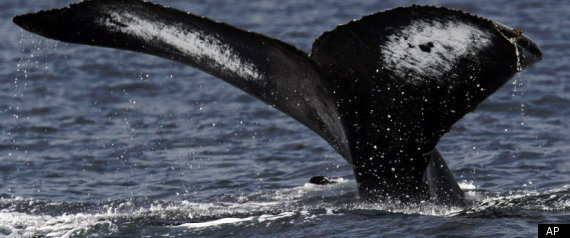
No breakthroughs were expected at the four-day meeting on the larger dispute between anti-whaling nations and a handful of countries who hunt whales despite a 1986 moratorium. Talks on allowing limited commercial whaling broke down last year.
"It turned out... last year that some of the anti-whaling countries were not willing to accept that kind of compromise" said Tomas Heidar, Iceland's IWC commissioner. "The big issue is of course the possibility of a compromise, and that does not exist at the moment."
Host nation Britain has proposed reforms to make the commission more transparent and effective. Its proposal would force governments to pay their membership fees by bank transfers, which can be easily traced, instead of cash or checks.
The move comes in the wake of allegations last year that Japan has been using aid money and personal favors to buy votes. Japan denies any wrongdoing.
About 1,500 whales are killed each year by Japan, Iceland and Norway. Japan, which kills the majority of whales, insists its hunt is for scientific research, but more whale meat and whale products end up in Japanese restaurants than in laboratories.
Australia, a leading anti-whaling nation, has launched a complaint against Japanese whaling at the International Court of Justice in The Hague, the U.N.'s highest court.
Japanese whalers regularly hunt in Antarctic waters south of Australia, a feeding ground for 80 percent of the world's whales, and the commission has no enforcement powers to stop them.
However, confrontations with anti-whaling activists forced Japan to cut short its annual hunt off Antarctica this year. Protesters threw paint, smoke bombs and rancid butter in bottles toward the Japanese whaling ships. They also got a rope entangled in the propeller on a harpoon vessel, causing it to slow down.
Criticism against Japan was expected to be somewhat muted at the IWC talks this year in the wake of the devastating tsunami and earthquake in March, which caused extensive damage to Japan's fishing fleet and its whaling infrastructure.
___
Associated Press writer Karl Ritter in Stockholm contributed to this report.
Subscribe to:
Comments (Atom)
